Biodiversity Conservation Projects
Government initiatives for biodiversity conservation
1. Project tiger
- The Project Tiger scheme was initiated in 1973 during the tenure of Prime Minister Indira Gandhi.
- The Government of India launched the Project Tiger scheme in collaboration with the WWF-International.
- The Ministry of Environment, Forest and Climate Change continues to run the ongoing Project Tiger scheme.
- The scheme's primary goal is to promote in-situ conservation of tigers by expanding their habitats.
Objectives:
- to maintain a viable population of tigers for scientific, cultural and ecological values.
- to preserve areas rich in biodiversity as a national heritage for the education and enjoyment.
National tiger conservation authority(ntca)-
- The National Tiger Conservation Authority (NTCA) is a government agency established under Section 38 L (1) of the Wildlife (Protection) Act, 1972.
- The agency was formed in 2005 based on the suggestions of the Tiger Task Force.
- The primary aim of NTCA is to protect the endangered Bengal tiger and its habitat across India.
- It also helps in the management of tiger reserves and the monitoring of the tiger population.
- NTCA collaborates with state governments, NGOs, and other stakeholders to implement conservation programs and initiatives.
Chairperson-
- Minister in charge of the ministry of environment and forests .
Vice-chairperson-
- The minister of state in the ministry of environment and forests.
Powers and functions-
- To lay down normative standards for tourism activities and guidelines for project tiger from time to time.
- To ensure that tiger reserves and areas linking on protected area or tiger reserve with another protected area or tiger reserve are not diverted for ecologically unsustainable uses.
- To facilitates and support tiger reserve management in the state for biodiversity conservation initiatives.
- No alteration in the boundaries of a tiger reserve shall be made except on a recommendation of the national tiger conservation authority and the approval of the national board for wild life.
- A new computerized tiger monitoring protocol called Monitoring System for Tiger, Intensive Patrolling and Ecological Status (MSTrIPES) is being planned for implementation in all tiger reserves across the country by the National Tiger Conservation Authority (NTCA).
Tiger reserve
- In 1973, the Indian government established tiger reserves that are overseen by Project Tiger.
- The National Tiger Conservation Authority is responsible for managing the project.
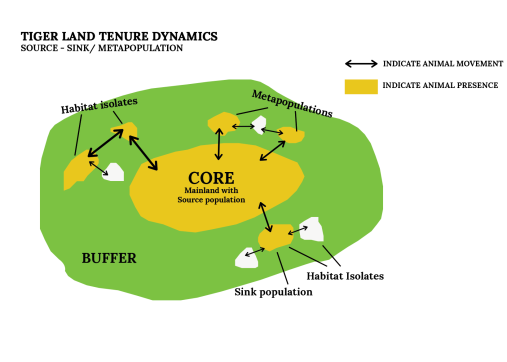
Structure of tiger reserve
A. Core or critical tiger habitat
- Biotic disturbances and forestry operations are prohibited in the core areas.
- These areas are identified and notified by the state government, in consultation with an expert committee.
- The Scheduled Tribes and Other Traditional Forest Dwellers (Recognition of Forest Rights) Act, 2006 envisions the creation of Critical Wildlife Habitats (CWHs).
- The Ministry of Environment and Forests has the authority to establish rules and designate a CWH.
B.Buffer or peripheral area
- This area is the surrounding area of core area.
- It has less restriction as comparison to core area.
- Human activities are permitted in this area.
2. Project elephant
- This project was launched in 1992.
- The elephant census is conducted once in 5 years under the aegis of project elephant.
- Through Project Elephant, the Ministry of Environment, Forest, and Climate Change offers financial and technical assistance to the primary elephant range states in the country.
Aim-
- to ensure the long-term survival of a viable population of elephants in their natural habitats in north and north eastern india and south india.
- to protect elephants, their habitat and corridors.
- to address issues of man-animal conflict.
- developing scientific and planned management measures for conservation of elephants, etc.
As per census 2017 karnataka followed by assam and kerala have highest population of elephants
Programmes related to elephant-
The elephant was declared india’s ‘national heritage animal’ in october 2010. And following projects/programme have been launched for its conservation.
A. Mike (monitoring of illegal killing of elephants) –
- It was launched in 2004.
- It is mandated by cop resolution of cites in 1997.
Purpose-
- To measure the levels and patterns of illegal hunting of elephants.
- To identify any changes in these trends over time.
- To investigate the factors that contribute to these changes.
- To evaluate the extent to which these trends are influenced by decisions made by the Conference of the Parties to CITES (Convention on International Trade in Endangered Species of Wild Fauna and Flora).
B. Haathi mere saathi-
Haathi mere saathi is a campaign launched by the ministry of environment and forest (moef) in partnership with the wildlife trust of india (wti).
- It focusses on bringing awareness among people regarding elephant conservation.
- On May 24th, 2011, the Elephant-8 ministerial meeting was held in Delhi, where the campaign was introduced.
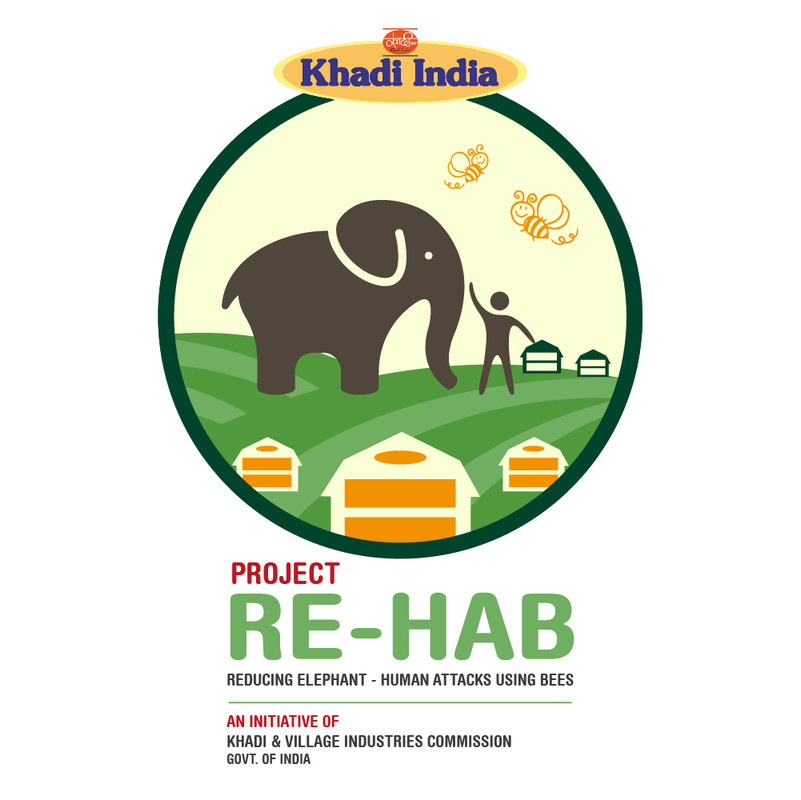
C. Project rehab-reducing elephant human attacks using bees
- The Project Rehab aims to reduce human-elephant conflicts by using bees to deter elephants from entering human habitation areas.
- The initiative is led by the Khadi and Village Industries Commission (KVIC) in India.
- The project involves the creation of bee fences to deter elephants from entering the areas where humans live and work.
- The bee fences have proven to be effective in reducing human-elephant conflicts and protecting both humans and elephants.
- The KVIC is working with local communities to implement the project and educate people about the benefits of using bee fences as a non-lethal solution to human-elephant conflicts.
D. Elephant task force-
- It was constituted in2010 under the chairmanship of mahesh rangarajan.
Objective-
- To review the existing policy of elephant conservation in india and formulate future interventions.
- The task force came out with a comprehensive report in august that year, called gajah: securing the future for elephants in india which provided comprehensive strategy for elephant conservation in india.
3. Project crocodile
Project crocodile scheme was launched in 1975 because of survey conducted by h.r. bustard in 1974.he also submitted the information regarding crocodile species in india and they are as follows-
A.Gharial-
- This species, which was formerly abundant in the rivers of north india, was considered in danger of extinction because of habitat destruction.
- The lethal effect of set nylon nets and poaching activity.
- It was found that the surviving populations were extremely small.
- This is freshwater crocodile which is now critically endangered.
B. Estuarine crocodile-
- This species was formerly common along the shores and rivers of the subcontinent, but by 1974 it had become extinct in the states of kerala, tamil nadu and andhra pradesh.
- A small population remained in the brahamani-baitarani deltaic area of orissa, the sundarbans of west bengal and the andaman islands.
C. Mugger
- The Mugger, also known as the freshwater crocodile, is considered a vulnerable species in India.
- The construction of dams on rivers has led to a significant decline in the population of Mugger crocodiles.
- The Government of India, in collaboration with the United Nations Development Programme (UNDP) and FAO, launched a conservation scheme to protect this species.
- As a part of this scheme, several crocodile sanctuaries have been established, such as the National Chambal Wildlife Sanctuary in Madhya Pradesh, which aims to protect Mugger crocodiles in their natural habitat through in-situ conservation strategies.
- Sixteen crocodile rehabilitation centres have also been set up across India for breeding and rearing programmes to support the conservation efforts.
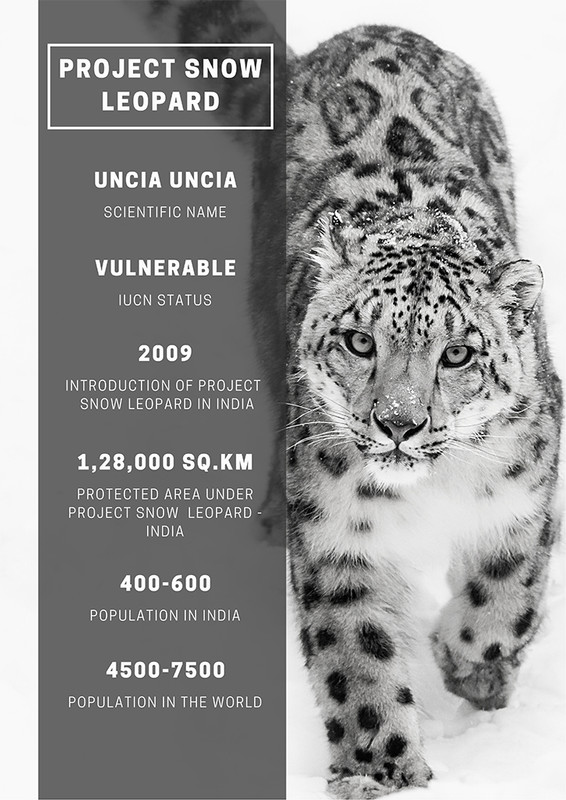
4. Prjoect snow leopard
- It was launched in 2009.
Goal-
-
Its goal is to promote conservation efforts through participatory policies and actions, in order to safeguard and preserve India's exceptional natural heritage of high-altitude wildlife populations and their habitats.
Location-
- All biologically important landscapes in the himalayan high altitudes in the states of jammu & kashmir, himachal pradesh, uttaranchal, sikkim, and arunachal pradesh.
Facts about snow leopard
-
- Snow leopard capital of the world- hemis national park, ladakh.
Protection status
- Iucn- vulnerable .
- Cites- appendix i.
- Wildlife (protection) act 1972- schedule i .
- Convention on migratory species (cms)-it is listed in cms.
The high-altitude Himalayas have been recognized by the government of India as a crucial habitat for the snow leopard, which is considered a flagship species.
5. Secure himalaya
- The secure himalaya project is a part of “global partnership on wildlife conservation and crime prevention for sustainable development” (global wildlife program) funded by the global environment facility (gef).
- The project promotes sustainable management of alpine pastures and forests in the high range himalayan ecosystems to secure conservation of globally significant wildlife, including endangered snow leopard and their habitats to ensure sustainable livelihoods and socio-economic benefits for communities.
- It contributes to the global snow leopard ecosystem protection program (gslep) (the gslep is a high-level inter-governmental alliance of all the 12 snow leopard range countries.).
6. Living himalaya network initiative
- It is an initiative of wwf.
- It focusses on habitat and species conservation in himalayan region.
7. Project hangul
- The project hangul had started in 1970 by the kashmir government with the help of wwf.
- Later the project was rechristened as “save kashmir’s red deer hangul” in 2009.
Hangul-
- Hangul is also known as kashmiri stag.
- "The Hangul" is the sole surviving species of the Red Deer family found in Asia.
- The state animal of the former state and current union territory of Jammu & Kashmir is the Hangul.
- Iucn status- critically endangered.
- Threats- habitat destruction, poaching etc.
8. Project lion
- It was launched in 2020 to conserve asiatic lions.
- Six new sites apart from the kuno-palpur wildlife sanctuary were identified under project lion for their relocation.
Asiatic lions-
- Iucn status - Endangered.
- Location- gir national park gujrat.
9. Project dolphin
- Arth Ganga is a significant inter-ministerial initiative of the Indian Government, approved in 2019 to rejuvenate the River Ganga.
- The initiative gained in-principle approval at the first meeting of the National Ganga Council (NGC), headed by the Prime Minister.
- One of the planned activities under Arth Ganga is Project Dolphin, which will follow the model of Project Tiger.
- Project Dolphin aims to conserve and protect the endangered Gangetic river dolphin population and its habitat in the Ganga river system.
- The project will involve research, conservation efforts, and creating public awareness to ensure the survival and protection of the Gangetic river dolphin.
Gangetic dolphin
- These are generally blind and catch their prey in a unique manner.
- They emit an ultrasonic sound which reaches the prey. Hey are also called ‘susu’.
- Protected under schedule 1 of wildlife protection act 1972.
- The Ganges river dolphin can only live in freshwater
- Gangetic dolphin is national aquatic animal of india.
- They are found in ganges-brahmaputra-meghna river systems.
- Besides gangetic dolphins the irrawady dolphins are found in brackish waters of odisha.
- The Wildlife (Protection) Act of 1972 includes all types of dolphins (cetaceans) that inhabit fresh water, brackish water, and marine environments in Schedule-I.
10. Turtle conservation
- Ministry of environment & forests initiated the sea turtle conservation project in collaboration of undp in november, 1999 with wildlife institute of india, dehradun as the implementing agency.
- The implementation of the project is underway in ten coastal states throughout the country, with a particular focus on the state of Orissa.
- It has various components including extensive surveys along the coast, reviews of legislation and community-based conservation, education and awareness.
Sea turtles-
There are five species in indian waters i.e., olive ridley, green turtle, loggerhead, hawksbill, leatherback.
- Among these five the olive ridley, leatherback and loggerhead are listed as 'vulnerable' on the iucn red list of threatened species.
- The hawksbill turtle is listed as 'critically endangered' and green turtle is listed as 'endangered' on the iucn red list of threatened species.
Sea turtles are protected under the indian wildlife protection act of 1972, under the schedule 1
Breeding-
- The turtle breeding season typically occurs during November and December.
- Olive ridley, juvenile hawksbill, and green turtles utilize the eastern coastline as their feeding area.
The olive ridley
- The olive ridley turtles are the smallest and most abundant of all sea turtles found in the world.
- They are protected under cites: appendix i, wildlife protection act, 1972: scheduled 1 and vulnerable status under iucn.
- Arribada is the name given to their mass nesting.
- Gahirmatha marine sanctuary of odisha have largest breeding area of the turtles.
One Liner Short Question and Answers .
What is Project Tiger?
Project Tiger is a scheme launched by the Government of India in 1973 to promote the in-situ conservation of tigers by expanding their habitats.
When was the National Tiger Conservation Authority (NTCA) established?
The National Tiger Conservation Authority (NTCA) was established in 2005.
What is the primary aim of the NTCA?
The primary aim of the NTCA is to protect the endangered Bengal tiger and its habitat across India.
Who is the chairperson of the NTCA?
The chairperson of the NTCA is the Minister in charge of the Ministry of Environment and Forests.
What is the buffer or peripheral area of a tiger reserve?
The buffer or peripheral area of a tiger reserve is the surrounding area of the core area where human activities are permitted.
When was Project Elephant launched?
Project Elephant was launched in 1992.
What is the aim of Project Elephant?
The aim of Project Elephant is to ensure the long-term survival of a viable population of elephants in their natural habitats in north and northeastern India and southern India.
When was Haathi Mere Saathi campaign launched?
Haathi Mere Saathi campaign was launched in partnership with the Wildlife Trust of India by the Ministry of Environment and Forest (MoEF) in India.
What is the Project Rehab?
The Project Rehab is an initiative led by the Khadi and Village Industries Commission (KVIC) in India, which aims to reduce human-elephant conflicts by using bees to deter elephants from entering human habitation areas.
Who led the Elephant Task Force constituted in 2010?
The Elephant Task Force was chaired by Mahesh Rangarajan and constituted in 2010.
What is the main objective of the Elephant Task Force?
The main objective of the Elephant Task Force is to review the existing policy of elephant conservation in India.
What is the structure of a tiger reserve?
A tiger reserve has two areas: (a) the core or critical tiger habitat where biotic disturbances and forestry operations are prohibited, and (b) the buffer or peripheral area, which surrounds the core area and has fewer restrictions.
What is the frequency of the elephant census conducted under Project Elephant?
The elephant census is conducted once in five years under the aegis of Project Elephant.