Air pollution can be described as the existence of solid, liquid, or gaseous substances, along with noise and radioactive radiation in the atmosphere.
The concentration of these substances can be directly or indirectly harmful to living organisms, including humans, plants, and animals.
Additionally, air pollution can also interfere with the regular environmental processes and cause damage to property.
Major air pollutants
1. Oxides of sulphur
Source
- Oxides of sulphur SO2 and SO3 are produced by burning of coal and petroleum and are harmful to buildings, clothing, plants and animals.
Effect-
- The gas sulphur dioxide is one of the most frequently found species and is harmful to both plants and animals.
- Exposure to even low levels of sulphur dioxide has been linked to respiratory illnesses.
- Reports have suggested that the poisonous gas can cause damage to the respiratory system, making it difficult to breathe.
- It is important to minimize exposure to sulphur dioxide in order to protect both human health and the environment.
- Example- asthma, bronchitis, emphysema in human beings
Chlorosis-
- High concentration of SO2 causes chlorosis (yellowing of leaves), plasmolysis, damage to mucous membrane and metabolic inhibition.
Acid rain -
- SO2 and SO3 react with water to form Sulphuric and sulphurous acids.
- These may precipitate as rain or snow producing acid rain or acid precipitation.
2.Oxides of Nitrogen
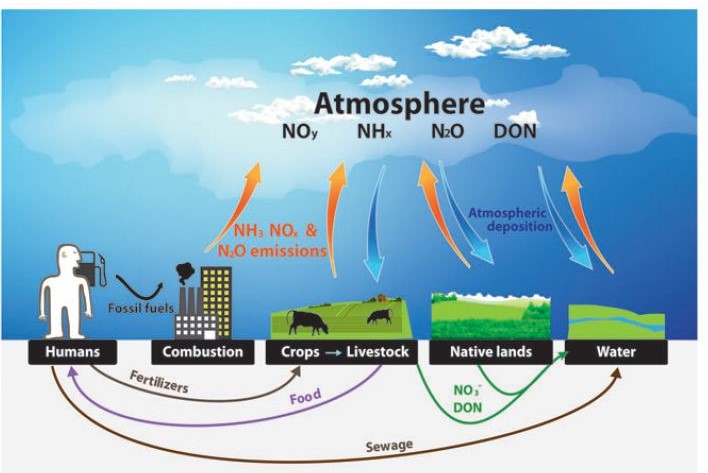
- These include NO and NO2 etc.
- Dinitrogen and Dioxygen at high temperature and altitude combine to yield significant quantities of nitric oxide (NO) and nitrogen dioxide ( NO2).
Sources-
- They are released by automobiles and chemical industries as waste gases and also by burning of materials.
- Nitrogen dioxide (NO2), which has greater health effects, is a secondary pollutant if created by the oxidation of NO under conditions of sunlight.
Effects-
- Elevated levels of nitrogen oxide have been linked to a higher incidence of lower respiratory infections in children.
- Extensive studies of the oxides of nitrogen have shown that they impair host defences in the respiratory tract, increasing the incidence and severity of bacterial infections after exposure.
- The presence of oxides of nitrogen in traffic and congested areas is responsible for the irritating red haze.
- Higher concentrations of NO2 damage the leaves of plants and retard the rate of photosynthesis
Fact-
- Certain plants e.g., Pinus, Juniparus, Quercus, Pyrus and Vitis can metabolise nitrogen oxide.
3.Particulate Pollutants
- Particulate pollutants refer to small solid particles or liquid droplets in the air.
- Sources of particulate pollutants include vehicle emissions, smoke particles from fires, dust particles, and ash from industrial activities.
- These particles can be inhaled and cause harm to human health, especially the respiratory system.
- Particulate pollution can also have negative impacts on the environment, such as reducing visibility and contributing to climate change.
Particulates in the atmosphere may be viable or non-viable-
The viable particulates-
- It includes bacteria, fungi, moulds, algae etc.,
- They are minute living organisms that are dispersed in the atmosphere.
The Non-viable particulates-
- It includes- Smoke, dust, mist, fumes etc.
Classification of Particulate Pollutants
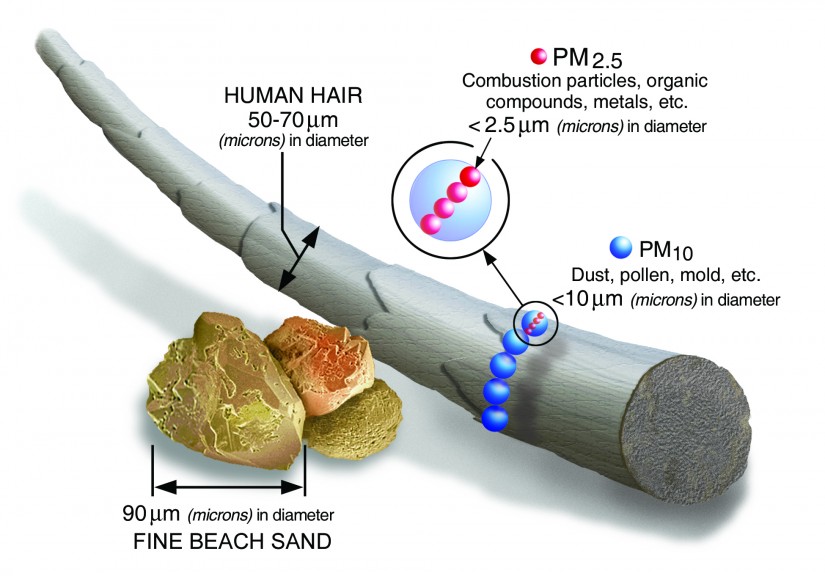
A. Particulate matter (PM 2.5)-
- It has size of particulates 2.5 μm and smaller.
- Particulates in urban air pollution that are extremely small, below 2.5 μm in diameter.
- Particulates in the fraction PM2.5 (2.5 μm and below) contain a proportionately larger amount of water and acid forming chemicals such as sulfate and nitrate, as well as trace metals.
- Particulates in the fraction PM2.5 (2.5 μm and below) contain a proportionately larger amount of water and acid forming chemicals such as sulfate and nitrate, as well as trace metals.
- 5 sulfate and ozone cannot be easily separated because they tend to occur together in urban air pollution.
B. Particulate matter (PM 10)
- PM10 particulates include larger particulates, which are mostly composed of carbon-containing material and produced from combustion.
- Unlike smaller particulates, the larger particulates in PM10 do not appear to have as significant an impact on human health.
C. Smoke-
-
Smoke particles are comprised of solid or solid-liquid mixtures that are created as a result of the burning of organic material.
Examples-
- Cigarette smoke, smoke from burning of fossil fuel, garbage and dry leaves, oil smoke etc.
D. Dust-
- Dust consists of small solid particles, typically over 1µm in diameter, that are generated during the crushing, grinding, and wearing down of solid materials.
E. Mists-
- Mists are produced by particles of spray liquids and by condensation of vapours in air.
Examples -
- Sulphuric acid mist and herbicides and insecticides that miss their targets and travel through air and form mists.
F. Fumes-
- Fumes are commonly produced through a variety of chemical reactions, such as sublimation, distillation, and boiling.
- The vapours that are condensed during these reactions create fumes.
- Fumes are typically composed of organic solvents, metals, and metallic oxides.
- These particles are very small and can be dangerous when inhaled.
- Proper ventilation and personal protective equipment should be used when working with substances that produce fumes.
G. Smog-
- The word smog is derived from smoke and fog.
- This is the most common example of air pollution that occurs in many cities throughout the world.
Types of Smog
Classical smog –
- Classical smog is a type of smog that occurs in cool, humid climates.
- It is formed from a mixture of smoke, fog, and sulfur dioxide.
- This type of smog is also known as reducing smog because it is chemically a reducing mixture.
Photochemical smog-
- Photochemical smog is a type of air pollution that typically occurs in warm, dry, and sunny climates.
- The primary components of photochemical smog are unsaturated hydrocarbons and nitrogen oxides, which are produced by vehicles and factories.
- When these pollutants are exposed to sunlight, they undergo a series of complex chemical reactions that form a mixture of harmful gases and particles.
- The resulting smog has a high concentration of oxidizing agents, which can have serious negative effects on human health and the environment.
- Due to its high levels of oxidizing agents, photochemical smog is often referred to as "oxidizing smog."
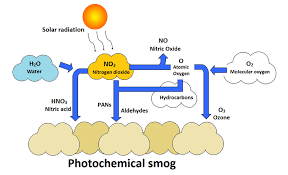
- The common components of photochemical smog are ozone, nitric oxide, acrolein, formaldehyde and peroxyacetyl nitrate (PAN).
How smog is formed-
- When the number of hydrocarbons and Nitric oxide (NO) increases in the atmosphere than they go under chain reaction in presence of the sunlight and NO2 is formed and it further dissociate to form oxygen atom which further reacts to form ozone and this ozone further reacts and form NO2 which contributes to blue haze.
- Peroxyacetyl nitrate (PAN) is also product of these reactions which is also another pollutant.
To begin the chemical process of photochemical smog development the following conditions must occur:
- Sunlight.
- The production of oxides of nitrogen (NOx).
- The production of volatile organic compounds (VOCs).
- Temperatures greater than 18 degrees Celsius.
Effects of photochemical smog
- Ozone and nitric oxide irritate the nose and throat and their high concentration causes headache, chest pain, dryness of the throat, cough and difficulty in breathing.
- It can result in the deterioration and cracking of rubber and other materials, as well as causing damage to plant life.
- It also causes corrosion of metals, stones, building materials, rubber and painted surfaces.
4. Hydrocarbons
- Hydrocarbons are organic compounds that consist of hydrogen and carbon atoms.
- They are formed by the incomplete combustion of fuels used in vehicles.
- Hydrocarbons have been linked to cancer and are considered carcinogenic.
- They are classified as criteria air pollutants due to their role as catalysts in the formation of photochemical smog.
5. Oxides of carbon
- Incomplete combustion of coal, oil and other fuels for energy production, manufacturing and transport; biomass burning, exhausts from aircrafts and space rocket engines, etc. give rise to carbon dioxide (CO2) and carbon monoxide (CO).
A. Carbon monoxide-
- Carbon monoxide is a gas that has no color or odor, making it difficult to detect.
- This gas is highly toxic to living organisms as it can impede the delivery of oxygen to organs and tissues, leading to severe health issues and even death.
- It is produced as a result of incomplete combustion of carbon
Sources
- Carbon monoxide is primarily released into the atmosphere through automobile exhaust.
- Incomplete combustion of coal, firewood, petrol, and other sources are additional contributors to CO emissions.
Effect
- Carbon monoxide becomes lethal at concentrations exceeding 100 ppm, which is frequently encountered during traffic congestion in urban areas.
- When carbon monoxide binds to hemoglobin, it forms carboxyhemoglobin, which is 300 times more stable than the oxygen-hemoglobin complex.
- A concentration of 3-4% of carboxyhemoglobin in blood greatly reduces its oxygen-carrying capacity, leading to oxygen deficiency in the body.
- Oxygen deficiency can result in several symptoms, including headaches, weak eyesight, nervousness, and cardiovascular disorders.
B. Carbon Dioxide
- Carbon dioxide gas is typically found only in the troposphere layer of the atmosphere.
- Normally, it makes up around 0.03% of the volume of the Earth's atmosphere.
- Due to increased use of fossil fuels, a significant amount of carbon dioxide is released into the air.
- Green plants play a crucial role in removing excess carbon dioxide from the atmosphere, which helps to maintain an appropriate level of CO2.
Sources-
- Carbon dioxide (CO2 ) is released into the atmosphere by respiration, burning of fossil fuels for energy, and by decomposition of limestone during the manufacture of cement.
- It is also emitted during volcanic eruptions.
Effect-
- It’s increase in the air may cause green house effect, rise in the atmospheric temperature.
- CO2 has a major role in greenhouse effect, produces weak carbonic acid adding to acid rains.
- CO affects human health by binding to haemoglobin, which may result in asphyxia; haemoglobin has 250 times more affinity with CO as compared to that of O2.
Some other air pollutant
1. Lead
- Lead is among the trace metals that have been extensively studied.
- The substance is widely acknowledged for its high toxicity, which can cause nerve damage.
- In children, exposure to lead has been linked to neurobehavioral issues and learning disabilities.
2. Asbestos
- Asbestos is a mineral fiber that has been used as insulation and as fire retardant in buildings.
- Many asbestos products have been banned, and its use is now limited. But in older buildings asbestos is still found in pipe and furnace insulation, asbestos shingles, floor tiles, textured paints, and other construction materials.
Health Effects-
- Asbestosis (lung scaring ), Mesothelioma (cancer of the lung and the abdominal lining),Lung cancer.
3. Trace Metals
- Trace elements such as cadmium, mercury, zinc, copper, lead, and others are found in small amounts in the environment or body.
- These elements are called trace metals.
- Human activities have led to the increased release of trace metals into the environment.
- The accumulation of trace metals in the environment may have direct health effects on the nervous and respiratory systems.
A. Mercury
- It is present in gaseous form in the atm. because of its relatively high vapor pressure.
- The gaseous mercury is washed from the air by rain a portion of it enters the aquatic system and the remaining is bound to the soil over the land.
Health effects-
- Both elemental and methylmercury are toxic to the peripheral and central nervous systems.
- Inhaling mercury vapour can cause detrimental effects on the immune, digestive, and nervous systems, as well as the lungs and kidneys.
- Prolonged exposure to mercury vapour can be fatal.
B. Ozone
- Ozone is a reactive compound that can cause irritation in the lungs and interfere with the body's defense mechanisms.
- Changes in breathing patterns can occur due to the effects of ozone on the reflex breathing mechanism.
- In the lower atmosphere, ozone is created when oxygen reacts with nitrogen compounds and volatile hydrocarbons using light from the sun as a source of energy.
- The creation of ozone is more likely to occur in stagnant weather conditions and inversions, particularly in sunny conditions where there is sufficient time for photochemical reactions to take place.
- Ozone is chemically unstable, and will react with a variety of substances.
C. Hydrocarbons (HCs) also called volatile organic compounds (VOCs)
- Volatile Organic Compounds (VOC) includes benzene, chloroform, methanol, carbon tetrachloride and formaldehyde among hundreds of other compounds.
- Gasoline is a mixture of many such compounds. some of these VOCs are highly reactive Like nitrogen compounds, they cause indirect effects (such as helping to create ozone) as well as having direct human physiological effects.
Source-
- Evaporation from gasoline tanks.
- Burning of fuels, biomass.
- Municipal land fills.
- Microbial activity of sewage.
- Industrial process involving solvents.
Effects-
- They can cause irritation to the respiratory tract (from increased rhinitis, or runny nose, to asthma) as well as headaches and other nonspecific complaints.
- At high concentrations, they have markedly toxic effects, some of which vary by compound, but which include neurological effects in all cases.
- Direct toxicity from VOCs is primarily an indoor air pollution problem and an occupational hazard, as levels indoors and in the workplace can reach many times that of outdoor levels.
D. Hydrogen sulphide (H2S) & Hydrogen fluoride (HF)-
Sources-
- Oil wells and refineries.
- Transport vehicles.
- Municipal land fills.
- Fertilizer, ceramic, paper, chemical and paint industries.
- Pesticides, fungicides, aluminium production; coal gasification.
Effect-
- Cause respiratory problems,
- Toxicity and even death to humans and other animals.
- Damage to crops.
E .Photochemical oxidants-
It includes following chemicals-
- Ozone (O3).
- peroxyacyl nitrates (PANs).
- Formaldehyde (CH2O).
- Acetaldehyde (C2H4O).
- Hydrogen peroxide (H2O2) & Hydroxyl radical (HO).
Sources-
- Chemical reactions that occur in the atmosphere when sunlight reacts with oxides of nitrogen and hydrocarbons are known as photochemical reactions.
Effects-
- Produce haze; irritation to eyes, nose and throat; respiratory problems; blocking of sunlight.
F. Liquid droplets of Sulphuric acid (H2SO4) , Nitric acid (HNO3) , Oil & Pesticides-
Sources-
- Agricultural pesticides.
- Fumigation.
- Oil refineries.
- Reactions of pollutants in the atmosphere.
Effect-
- Contribute to acid rains.
- Corrosion.
- Damage to various life forms.
G. Aerosols
- Aerosols are chemicals released in the air in vapour form.
- These include fluorocarbon (carbon compound having fluorine) present in emissions from the Jet aeroplanes.
- Aerosols deplete the ozone layer.
H. Fluorides
- Fluorides are naturally occurring in rocks, soils, and minerals.
- When heated, fluorides can release a dangerous gas called hydrogen fluoride.
- Exposure to hydrogen fluoride can cause harm to livestock and cattle.
- The gas is highly toxic and poses a serious threat to animal health.
Effects of Air Pollution
1. Effect on Plants
- The impact of certain pollutants on plants has been studied extensively.
- Exposure to fluorides and PAN (peroxyacetylnitrate) can cause damage to leafy vegetables such as lettuce and spinach.
- Hydrocarbons are known to cause a range of harmful effects on plants, including premature yellowing, the falling of leaves and flower buds, discoloration, and curling of sepals and petals.
- Ozone damages cereals, fruits, and cotton crop.
- Smoke and dust cover the leaf surface and reduce photosynthetic capacity of plants.
2. Effect on Humans
- Exposure to SO2 can lead to various health problems such as dry mouth, scratchy throat, smarting eyes, and respiratory tract disorders.
- People exposed to cotton dust may develop respiratory disorders, including bronchitis and asthma.
- Ozone can cause dryness of mucous membranes, changes in vision, headaches, pulmonary congestion, and oedema.
- The exhaust of buses, trucks and two wheelers cause eye and lung irritation. This is due to oxide of nitrogen
3. Effects on Ecosystem
- Elimination of key organisms.
- Changes in phytoplankton species.
- Habitat destruction of many organisms.
- Increase in number of endangered species.
4. Effects of air pollution On Materials
- Abrasion (loss of material by wind with coarser particles).
- Corrosion (acidic effect of rain water).
- Direct chemical attack.
Methods to control air pollution
- Use of better designed equipment and smokeless fuels, hearths in industries and at home.
- More trees should be planted along road side and houses.
- Renewable energy sources, such as wind, solar energy, ocean currents, should fulfil energy needs.
Mechanical Methods like-
- Sudden change in direction of the gas flow.
- This causes the particles to separate out due to greater momentum.
Fabric Filters-
- The gases containing dust are passed through a porous medium. These porous media may be woven or filled fabrics.
- The particles present in the gas are trapped and collected in the filters. The gases freed from the particles are discharged.
Wet Scrubbers-
- Wet scrubbers are used in chemical, mining and metallurgical industries to trap SO2, NH3, metal fumes, etc.
Electrostatic Precipitators-
- When a gas or an air stream containing aerosols in the form of dust, fumes or mist, is passed between two electrodes, then, the aerosol particles get precipitated on the electrode.
Control and treatment of VOC and organic hazardous air pollutant emissions are generally accomplished by -Adsorption, Incineration, Condensation & Gas absorption.
Important one liner on Air Pollution.
What are the major air pollutants?
Answer: The major air pollutants include oxides of sulphur, oxides of nitrogen, and particulate matter.
How are oxides of sulphur produced?
Answer: Oxides of sulphur, including SO2 and SO3, are produced by burning of coal and petroleum.
What are the effects of exposure to sulphur dioxide?
Answer: Exposure to even low levels of sulphur dioxide has been linked to respiratory illnesses, such as asthma, bronchitis, and emphysema in human beings.
What is chlorosis?
Answer: Chlorosis is the yellowing of leaves, caused by high concentrations of SO2.
How is acid rain formed?
Answer: Acid rain is formed when SO2 and SO3 react with water to form sulphuric and sulphurous acids, which may precipitate as rain or snow.
What are the sources of oxides of nitrogen?
Answer: Oxides of nitrogen are released by automobiles and chemical industries as waste gases and also by burning of materials.
What are the effects of elevated levels of nitrogen oxide?
Answer: Elevated levels of nitrogen oxide have been linked to a higher incidence of lower respiratory infections in children and impair host defences in the respiratory tract.
What are the sources of particulate pollutants?
Answer: Sources of particulate pollutants include vehicle emissions, smoke particles from fires, dust particles, and ash from industrial activities.
What is smog?
Answer: Smog is a type of air pollution that is derived from smoke and fog, caused by the interaction of pollutants in the atmosphere with sunlight.
What is photochemical smog?
Photochemical smog is a type of air pollution caused by the reaction of sunlight with nitrogen oxides and organic compounds in the atmosphere.
How does photochemical smog affect human health?
Photochemical smog can cause respiratory problems, headaches, chest pain, coughing, and difficulty breathing. It can also damage rubber, paint, and other materials.
Why are hydrocarbons considered carcinogenic?
Hydrocarbons have been linked to cancer because they are classified as criteria air pollutants due to their role as catalysts in the formation of photochemical smog.
How does sulfur dioxide affect the environment?
Sulfur dioxide can cause acid rain, which can harm trees, lakes, and other ecosystems.
How does photochemical smog form?
Photochemical smog forms when nitrogen oxides and volatile organic compounds react in the presence of sunlight.
What is the main source of nitrogen oxides in the atmosphere?
The main source of nitrogen oxides in the atmosphere is combustion, especially in motor vehicles.